Deep in a forest after dark, when every other creature seems to announce its presence with a snapped twig or rustling leaf, one hunter moves through the air without making a single sound. A mouse scurrying across dry leaves has no warning at all before a set of talons closes around it. There is no whoosh of wings, no telltale flapping, nothing but silence right up until the moment of impact. This is the signature skill of the owl, an animal that has turned silent flight into one of the most refined hunting tools in the entire animal kingdom.
Wings Engineered for Silence
Most birds create noise when they fly because air rushing over stiff, smooth feathers produces turbulence, and that turbulence generates sound. Owls solve this problem through a set of remarkable feather adaptations found in almost no other bird.
The leading edge of an owl’s wing feathers has a soft, comb like fringe, made up of tiny serrations that break up the airflow passing over the wing. Instead of one large turbulent rush of air, the sound gets scattered into countless smaller streams that are far quieter and pitched above the hearing range of most prey animals. At the trailing edge of the wing, a soft fringy edge does the opposite job, smoothing out the airflow as it leaves the wing so it does not create a sharp trailing noise.
On top of all this, the surface of an owl’s feathers is covered in a velvety, almost fuzzy texture that absorbs sound rather than letting it bounce or resonate. Combined, these three features essentially transform the owl’s wing into an acoustic dampening system, muffling sound at every stage of the wingbeat.
A Body Shaped for Gliding, Not Speed
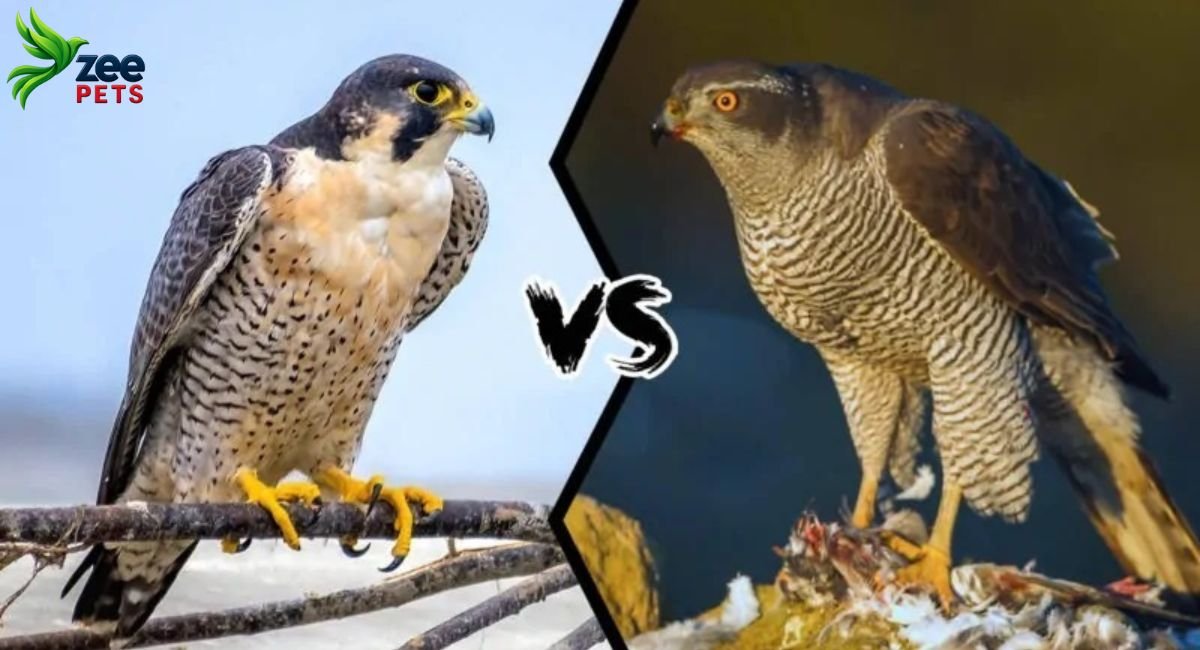
Unlike falcons, which rely on incredible speed to run down prey in open air, owls take a completely different approach. Their broad, rounded wings are built for slow, controlled gliding rather than fast pursuit. This lower speed actually works in their favor because slower flight naturally produces less air disturbance and therefore less noise.
An owl in flight often looks almost lazy compared to other birds of prey, drifting gently through the trees with barely any effort. That relaxed appearance is deceptive. Every glide is precisely controlled, allowing the owl to adjust its path instantly the moment it senses movement below, all while making almost no sound that could alert its target.
Ears That Hear What Eyes Cannot See
Silence would mean little without the ability to locate prey with pinpoint accuracy in total darkness, and this is where an owl’s hearing becomes just as important as its wings.
Many owl species have ears positioned asymmetrically on their skull, meaning one ear sits slightly higher than the other. This might seem like a strange design flaw, but it actually gives owls an extraordinary advantage. Sound reaching the higher ear arrives at a tiny fraction of a second sooner than sound reaching the lower ear, and this minute difference lets the owl pinpoint exactly where a sound is coming from, both horizontally and vertically, with astonishing precision.
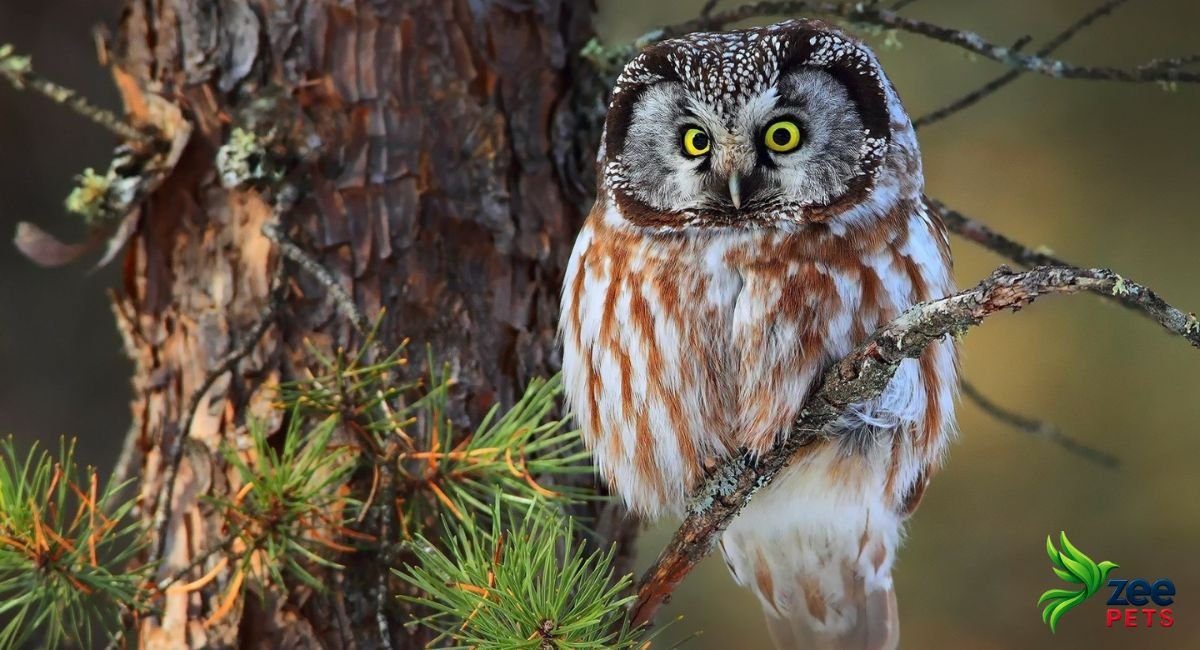
Some owls can locate the rustle of a mouse under a layer of snow or thick grass using hearing alone, without ever seeing the animal at all. Their large facial disc, that flat circular arrangement of feathers around the eyes, works almost like a satellite dish, funneling faint sounds toward their ears and amplifying noises that would otherwise be far too quiet to notice.
Eyes Built for the Dark
While hearing plays a massive role, an owl’s eyesight is equally impressive. Owl eyes are enormous relative to their skull size, so large in fact that they cannot rotate within their sockets the way human eyes can. To compensate, owls have developed the ability to rotate their heads to an extreme degree, letting them scan their surroundings without needing to move their eyes at all.
Inside those oversized eyes, owls have a very high concentration of light sensitive cells called rods, which are specialized for detecting even the faintest traces of light. This gives them exceptional night vision, allowing them to spot the slightest movement in conditions where most animals would see nothing but darkness.
Talons That Strike With Deadly Precision
All the stealth in the world would be wasted without a finishing move to match, and an owl’s talons deliver exactly that. Long, curved, and incredibly sharp, these talons are capable of exerting an enormous amount of gripping force relative to the bird’s size, enough to instantly immobilize prey the moment contact is made.
Because the approach is silent and the strike is sudden, prey animals often have no time to react at all. There is no chase, no struggle beforehand, just a completely unexpected impact followed by an immediate, secure grip that leaves little chance of escape.
Patience as a Hunting Strategy
Unlike some predators that rely on covering large amounts of ground in search of prey, many owls hunt through patience rather than pursuit. Perched quietly on a branch, an owl can remain almost motionless for long stretches, using its exceptional hearing to scan the surrounding area for the faintest sound of movement.
Once a target is detected, the owl launches only when it has a clear sense of exact location, minimizing wasted energy and reducing the risk of alerting nearby prey through unnecessary movement. This combination of stillness, patience, and precision timing makes owls remarkably efficient hunters despite spending relatively little time in active flight.
Adapting to Different Environments
Not every owl species hunts the same way, and their adaptations often reflect the environment they live in. Owls living in dense forests tend to have shorter, broader wings suited for maneuvering quickly between trees, while owls found in open grasslands or tundra regions often have longer wings built for covering wider stretches of terrain in search of prey.
Some species specialize in hunting insects, others focus on small mammals, and a few larger owls are capable of taking down prey as large as rabbits or even other birds. Despite these differences, the core toolkit remains largely the same across the owl family: silent flight, exceptional hearing, sharp night vision, and a lethal, precise strike.
Life Beyond the Hunt
Owls are not only skilled hunters but also surprisingly complex in their social behavior. Many species are fiercely territorial, using low, resonant hoots to communicate boundaries to rival owls in the area. These calls can travel remarkably far through quiet night air, serving as both a warning to competitors and, during breeding season, a way to attract a mate.
Parenting duties are often shared, with one parent hunting while the other guards the nest, and many young owls spend weeks practicing short, clumsy flights before they develop the polished, silent gliding technique that defines the species as adults. Just like young red pandas learning to climb, young owls need real practice time before their instincts turn into refined skill.
Threats Facing These Nighttime Specialists
Despite their remarkable adaptations, owls face growing challenges across much of their range. Habitat destruction, particularly the loss of old growth forests that provide natural nesting cavities, has reduced suitable living space for many species. Agricultural expansion and pesticide use can also indirectly harm owls by reducing populations of the small mammals and insects they depend on for food.
Light pollution presents another modern challenge, disrupting the natural darkness that owls rely on for effective hunting and potentially interfering with their ability to detect prey. Vehicle collisions are another serious risk, since owls often hunt near roadsides where rodent populations tend to be higher, putting them directly in the path of passing traffic.
Conservation efforts in many regions now focus on preserving mature forest habitat, installing nest boxes in areas where natural cavities have become scarce, and encouraging reduced pesticide use to help protect the small prey species that owls need to survive.
A Predator Built on Precision, Not Power
Owls prove that dominance in nature does not always come from strength or speed. Instead, this predator succeeds through precision, patience, and an extraordinary set of physical adaptations built entirely around one goal: closing the distance on prey without ever being detected.
The next time silence falls over a nighttime forest, it is worth remembering that stillness may not mean nothing is happening. Somewhere above, an owl could be gliding through the dark on a wingbeat too quiet to hear, guided by ears sharp enough to track a single rustle in the grass, closing in on a target that will never know it was found until it is already too late.