
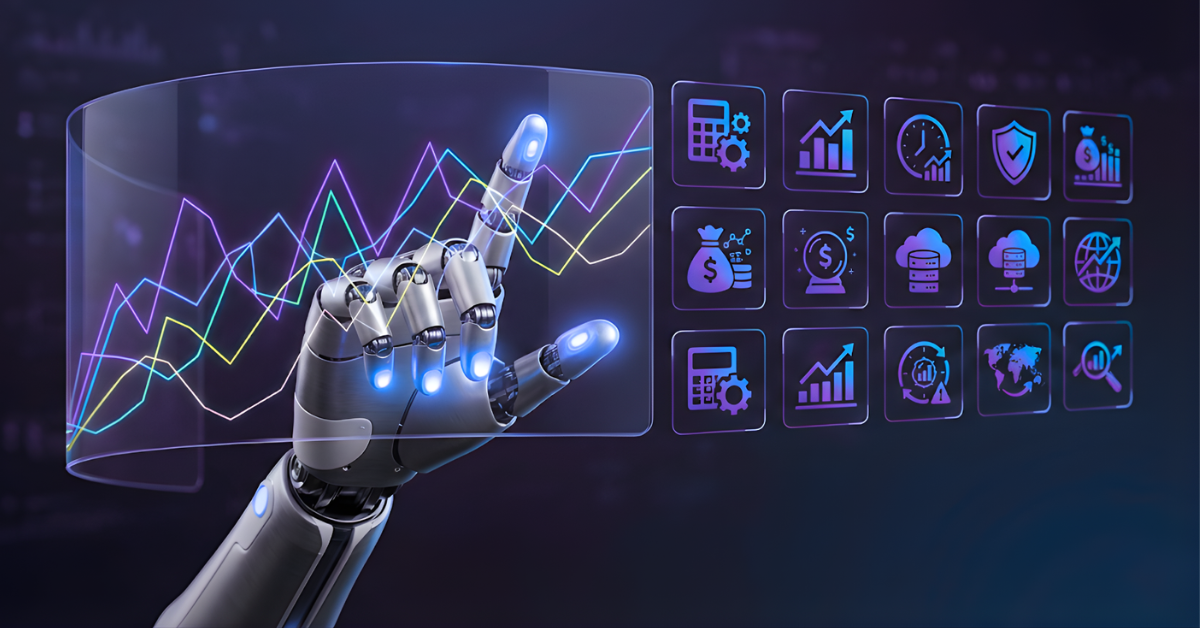
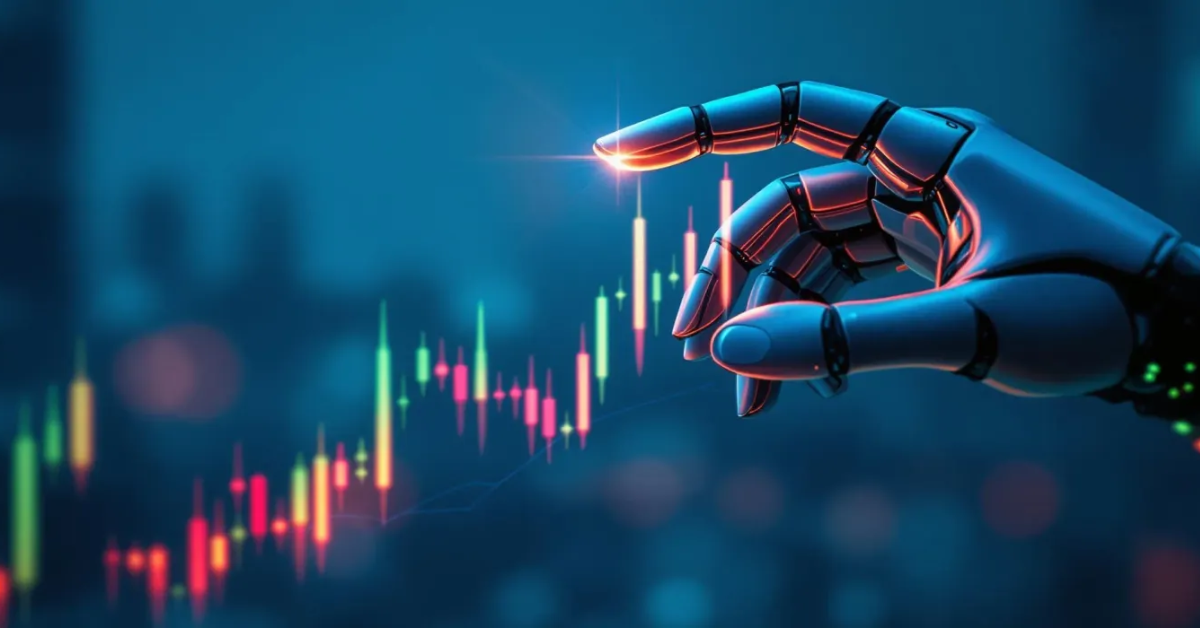
Financial success in 2026 is no longer about who has the most money, but who has the best math. I have spent over a decade watching markets evolve, and the shift we are seeing right now is unlike anything we have seen before. We have moved past simple charts. We are now in the era of deep predictive intelligence. If you are still making investment or business decisions based on last night’s news, you are already losing money. The market has already priced in that news before you even finished your coffee.
A few years back, I consulted for a mid-sized hedge fund that was bleeding capital. Their problem was simple but deadly: they relied on “expert intuition.” Their top analysts were brilliant, but they were human. They got tired, they had bad days, and they had personal biases. We replaced their core decision-making framework with automated predictive tools. Within six months, their risk-adjusted returns jumped by forty percent. Why? Because the AI didn’t care about the headlines, it only cared about the invisible data patterns that humans physically cannot see. This article is your masterclass in understanding these tools, avoiding the traps that break most investors, and positioning yourself at the top of the financial food chain.
The Brutal Reality of Modern Market Intelligence
The global financial landscape is now a battlefield of algorithms. When you use advanced tools for your analytics, you are essentially bringing a high-tech radar to a fog-filled war zone. These systems work by ingesting massive “alternative data” sets. This isn’t just stock prices. We are talking about satellite imagery of shipping ports, real-time credit card transaction flows, and even the linguistic nuances of central bank speeches.
The real power here is speed and correlation. A high-level AI tool can spot that a minor drought in Brazil will affect the stock price of a European beverage company six months from now. By the time a human analyst connects those dots, the opportunity is gone. Predictive analytics allows you to “buy the rumor” with mathematical certainty rather than just a lucky guess.
In my professional journey, the biggest lesson I learned is that the market is not random. It is a complex system of cause and effect. Most people fail because they look at the effect. Successful players use AI to identify the cause before the effect happens. This proactive stance is what creates generational wealth in the modern age.
What Most Websites Get Wrong About This
Most “tech blogs” you read are written by people who have never placed a million-dollar trade or managed a corporate balance sheet. They treat predictive AI like a magic wand. It is not. Here is the reality that the shiny marketing pages won’t tell you.
First, “Garbage In, Garbage Out” is the ultimate law. I have seen firms spend six figures on advanced AI software only to feed it delayed or unverified data. The result? The AI gave them very confident, very wrong predictions. High-CPM niches require high-quality data feeds. If your data source is weak, your predictive tool is just a very expensive random number generator.
Second, many believe that AI replaces the need for a CFO or a lead strategist. This is a massive mistake. AI is an instrument, not the player. The most common cause of financial tech failure is “automation blindness.” This happens when leadership stops questioning the machine. I once saw a retail giant lose millions because their AI predicted a surge in demand that was actually caused by a data glitch in its inventory software. The humans didn’t check the logic, and they over-ordered stock that they couldn’t sell.
Finally, ignore the hype about “fully autonomous wealth.” Every successful AI implementation I have ever overseen required a human mentor to set the guardrails. You define the ethics, the risk appetite, and the long-term vision. The AI handles the heavy lifting of the calculations.
The Architecture of High-Value Financial Forecasting
To truly dominate your niche, you need to understand what makes a tool “advanced” versus just “basic.” It comes down to the depth of the neural networks and the variety of data inputs. By utilizing predictive analytics in finance, professional-grade tools go far beyond simple price history to analyze complex “liquidity heat maps” and “order book imbalance” in real time.
Real-time sentiment analysis is another pillar. In 2026, the market moves on social sentiment faster than it moves on earnings reports. If an influential figure posts a cryptic message online, a top-tier AI tool parses that sentiment in microseconds and adjusts your portfolio’s hedge before the general public even sees the post.
Another critical factor is “Backtesting Integrity.” Advanced tools don’t just tell you what might happen; they prove their logic by running their current strategy against twenty years of historical data in a matter of seconds. If a strategy wouldn’t have survived the 2008 crash or the 2020 volatility, the tool will discard it. This level of rigorous testing is what gives professional investors the confidence to move large amounts of capital based on a machine’s suggestion.
Strategic Comparison: How Predictive AI Outperforms Manual Analysis
To see the gap between traditional methods and AI-driven strategies, we have to look at the mechanical differences in how they handle risk and opportunity.
| Performance Metric | Traditional Manual Analysis | Advanced AI Predictive Tools |
| Data Processing Capacity | Limited to a few hundred variables. | Capable of processing billions of data points. |
| Response Time | Hours or days (Reactive). | Milliseconds (Proactive/Preventative). |
| Emotional Interference | High (Fear, greed, and fatigue). | Zero (Pure mathematical objectivity). |
| Pattern Recognition | Linear and obvious trends only. | Non-linear, hidden, and complex correlations. |
| Risk Assessment | Based on historical averages. | Based on dynamic, real-time probability. |
| Scalability | Hard to scale without hiring more people. | Scalable across infinite markets instantly. |
| Market Coverage | Usually limited to one or two sectors. | Global coverage across all asset classes. |
The “Silent Killers” of Predictive Modeling
Even with the best tools, there are hidden risks that can wipe out your gains. One of the most dangerous is “Over-Optimization.” This is when you tune your AI so perfectly to past data that it becomes brittle. It expects the future to look exactly like the past. But the market is a living, breathing entity that constantly changes its own rules.
I always tell my students, “The AI shows you the path, but you must watch for the falling rocks.” You need a “Circuit Breaker” strategy. This is a manual override that kicks in when market volatility exceeds a certain threshold. No machine can account for total geopolitical chaos or a sudden global internet outage. Having a manual “kill switch” for your automated trades is not a sign of weakness; it is the hallmark of a professional.
Another hidden risk is “Data Monoculture.” If everyone is using the same popular AI tool, everyone gets the same prediction. This leads to crowded trades where everyone tries to buy or sell at the same time, causing the very crash they were trying to avoid. To get high revenue, you need an edge. You need to customize your analytics so you are seeing something that the “common” AI users are missing.
My Personal Recommendation: Who This Is For — and Who Should Skip It
After years in the trenches of financial technology, my advice is blunt.
Who This Is For: This is for the serious player. If you are managing a corporate treasury, running a high-traffic financial content site, or trading with capital that you cannot afford to waste, these tools are your new best friend. You need the “Information Gain” that only AI can provide. It is for the person who understands that in 2026, information is the only real currency.
Who Should Skip It: If you are looking for a “magic box” that prints money while you sleep without you understanding the basics of finance, stay away. You will likely fall for a “scam-bot” or a low-quality tool that will drain your account. Also, if your financial niche is extremely local and doesn’t rely on global data, these advanced tools might be overkill for your budget. Stick to the basics until your scale justifies the investment.
Mastering the Human-Machine Synergy
The ultimate goal of using advanced AI tools for predictive financial analytics is not to replace your brain, but to augment it. You want to reach a state of “Cyborg Finance,” where your human intuition and the machine’s processing power work in perfect harmony.
Start small. Don’t let the AI manage your entire life on day one. Give it a specific task, like “Predict the volatility of this specific sector for the next forty-eight hours.” Check its accuracy. Learn its quirks. Every AI model has a “personality” based on its training data. Some are aggressive; some are conservative. You need to find the one that matches your financial goals.
As you grow, you will find that these tools free up your most valuable asset: your time. Instead of staring at charts for twelve hours a day, you can spend your time on high-level strategy and relationship building. That is how you move from being a “worker” in the financial industry to being a “leader.” The technology is here, and it is more powerful than ever. The only question is whether you will master it or be left behind by those who do.
If you feel like you are ready to take your financial data strategy to the next level but aren’t sure which specific model fits your current business scale, let’s talk. I have helped many professionals move from basic spreadsheets to automated powerhouses. A single strategic adjustment in how you view your analytics can be the difference between a stagnant year and a record-breaking one. I am here to ensure you make the right move.





Leave a Reply