
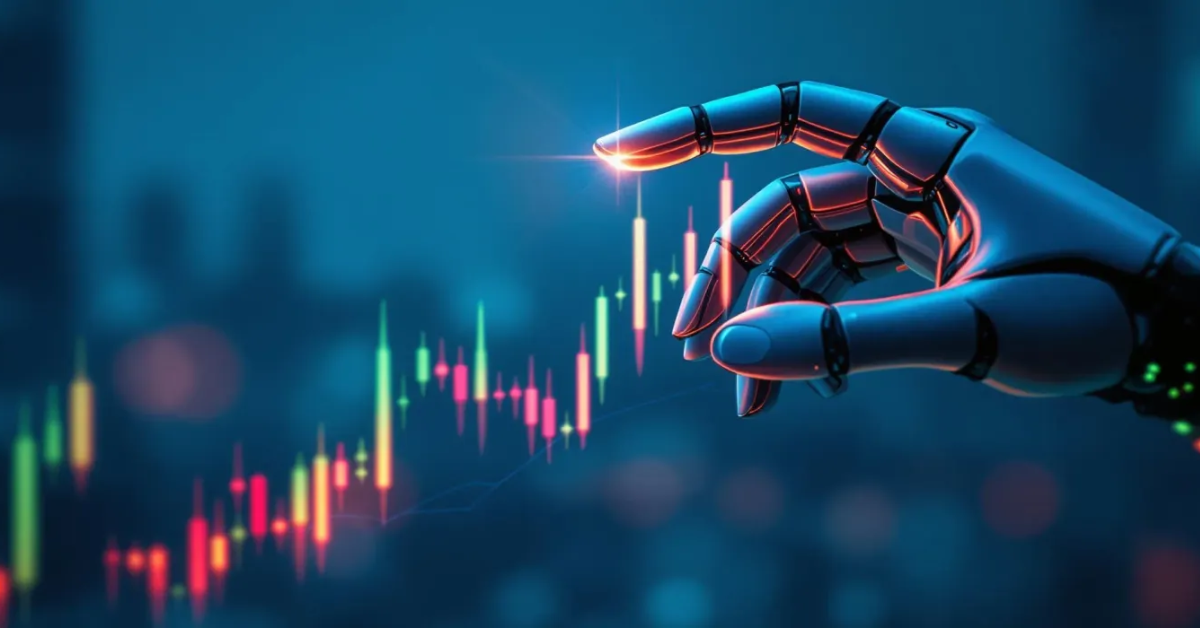
The world of finance has moved into a new era where milliseconds decide the difference between massive profit and total loss. We no longer live in a time where a human trader can look at a screen and click a button fast enough to catch a market move. Today, the markets are driven by high-performance AI algorithms for real-time trading that process millions of data points before a human can even blink. I have spent over a decade watching this transition happen from the inside of trading floors. I remember a specific moment in my career when a manual strategy I spent weeks perfecting was wiped out in less than two seconds by an automated system. That was the day I realized that the future of wealth is not about who has the best intuition but who has the best math. This guide is designed to take you deep into how these intelligent systems actually function and how you can navigate this complex landscape without falling into common traps.
The Internal Mechanics of High Speed Market Intelligence
To understand how high-performance AI algorithms for real-time trading actually work, you must first understand the concept of latency. In the world of elite trading, speed is everything. An algorithm needs to ingest data from an exchange and analyze it, and then send an order back in a tiny fraction of a second. These systems do not just look at price. They look at the order book, which shows every single person who wants to buy or sell at every possible price level. The AI is trained to find patterns in this mountain of data that indicate where the price will move next.
Most people think of AI as a single program, but it is actually a collection of many different layers working together. 1. First, there is the data ingestion layer, which must be incredibly clean. 2. Second, there is the feature engineering layer where the software decides which pieces of information are actually important. 3. Third is the prediction engine, where the actual machine learning happens. I once worked on a system that failed because it was trying to look at too much data. We found that by removing ninety percent of the noise and focusing only on the most critical price levels, the speed of the system increased tenfold. This proves that high performance is often about what you choose to ignore rather than what you choose to include.
The logic used in these algorithms has evolved from simple if then statements to complex neural networks. A neural network tries to mimic the way a human brain thinks by connecting different nodes of information. In a real-time environment, these networks are optimized to run on specialized hardware that can handle massive math problems instantly. When a pattern appears that matches a historical win, the system executes a trade with zero hesitation. This removal of human emotion is the primary reason why these systems dominate the modern stock and crypto markets.
The Evolution of Learning From Static Rules to Neural Networks
In the early days of automated trading, we used simple rules based on moving averages or basic math. If the price went above a certain line, the computer would buy. This worked for a while until everyone else started doing the same thing. When everyone uses the same simple rules, the profit disappears. This led to the rise of machine learning, where the computer does not just follow a rule but actually creates its own rules based on experience. This is the core of high-performance AI algorithms for real-time trading today.
The most advanced version of this is called reinforcement learning. In this setup, the AI is like a student in a classroom. Every time it makes a profitable trade, it receives a digital reward. Every time it loses money, it receives a penalty. Over millions of simulated trades, the AI learns which behaviors lead to the biggest rewards. It is a process of trial and error that happens at a speed no human can match. I have seen reinforcement models discover trading strategies that no human expert had ever thought of before. They find tiny hidden correlations between different global markets that seem completely unrelated to the naked eye.
However, this evolution comes with a significant challenge called overfitting. This happens when an algorithm becomes so good at trading the past that it fails to understand the future. It basically memorizes the history books but does not know how to handle a new event. I have seen million-dollar accounts disappear in an afternoon because a model was overfitted to a quiet market and could not handle a sudden piece of political news. High-performance systems must be balanced to be smart enough to recognize patterns but flexible enough to handle the unknown.
What Most Websites Get Wrong About This
If you search for information on trading algorithms online, you will find thousands of websites promising easy money. Most of these sites are written by people who have never actually coded a professional trading system. They treat AI as a magic crystal ball that can predict the future with perfect accuracy. This is the first and most dangerous myth. AI is not a prophet. It is a statistical calculator that deals in probabilities rather than certainties. If an algorithm has a sixty percent win rate, it is considered world-class. No system wins one hundred percent of the time, and anyone who tells you otherwise is lying.
Another common mistake found on generic blogs is the idea that you can just buy a pre-made bot and let it run forever. Professional high-performance AI algorithms for real-time trading require constant maintenance and tuning. The market is a living thing that is always changing. A strategy that worked perfectly last month might be completely useless today because the market volatility has shifted. I have spent countless nights adjusting model parameters because the global economic environment has changed. There is no such thing as a set-and-forget system in the high-stakes world of real-time finance.
Finally, many people believe that more complexity always leads to better results. This is a massive error that leads to slow and bloated systems. In high-frequency environments, the simplest model that solves the problem is usually the winner. Every extra line of code adds a tiny bit of delay. In a race where the winner is decided by microseconds, a simple and fast algorithm will beat a complex and slow one every single time. Real-world experience has taught me that the most profitable systems are often the most elegant and focused.
Core Architecture of a High-Performance Trading System
Building a system that can compete at the highest level requires more than just a good AI model. You need a complete architecture that supports that model and ensures it can breathe in a high-pressure environment. This involves everything from how you connect to the internet to how you store your historical data for training.
The table below explains the critical differences between a basic trading bot and a professional-grade high-performance system.
| System Feature | Basic Consumer Trading Bot | High Performance AI System |
| Data Processing | Processes data every few seconds | Processes data in microseconds |
| Hardware Choice | Runs on a standard home computer | Uses specialized GPU or FPGA chips |
| Market Connectivity | Uses standard public internet | Uses dedicated fiber or microwave links |
| Model Type | Simple linear regression or rules | Deep neural networks and RL models |
| Risk Management | Basic stop loss orders | Dynamic real-time risk adjustment |
| Backtesting | Uses limited historical price data | Uses full order book tick-by-tick data |
| Execution Path | Sends orders through a retail broker | Direct market access to the exchange |
As you can see from this comparison, the gap between a hobbyist and a professional is massive. A high-performance system is an industrial-grade tool that requires significant infrastructure. 1. You need a server that is physically located as close to the exchange as possible to reduce the time it takes for data to travel. 2. You need a data pipeline that can handle millions of updates per second without crashing. 3. You need a fail-safe system that can shut everything down if the algorithm starts behaving suddenly. I once saw a system enter a loop where it bought and sold the same stock thousands of times in a minute because of a small bug. Without a hard kill switch, that mistake would have bankrupted the firm.
Managing the Invisible Risks of Algorithmic Execution
When you hand over the keys of your capital to an algorithm, you are accepting a new set of risks that manual traders never have to face. The biggest of these is model drift. This happens when the market changes so much that the AI no longer understands what is happening. It is like a person who learned to drive in a small town suddenly being dropped in the middle of a busy city during a rainstorm. The rules they learned no longer apply in the same way. High-performance AI algorithms for real-time trading must have internal monitors that track their own performance. If the win rate drops below a certain level, the system should automatically stop trading and alert a human.
Another risk is the black swan event. These are rare and unpredictable events, like a sudden natural disaster or a surprise political decision. AI models are built on historical data, and since black swans are rare, the models often have no idea how to react. They might see a massive price drop and think it is a buying opportunity when in reality the world has changed. I always tell my students that you must have a human in the loop for these moments. The AI handles the speed, but the human handles the context.
There is also the risk of technological failure. A simple broken cable or a power outage at a data center can cause an algorithm to lose its connection to the market while it still has open positions. This is why professional systems always have redundancy. They have multiple servers in different locations and multiple ways to connect to the exchange. If one path fails, the system automatically switches to the other. Managing an algorithm is as much about managing the technology as it is about managing the finance.
My Personal Recommendation: Who This Is For — and Who Should Skip It
After years of building and repairing these systems, I have a very clear view of who should be involved in this space. This is not a path for everyone, and being honest about your resources is the first step to success.
- This is for you if you have a strong background in mathematics or computer science. You need to be comfortable looking at code and understanding statistical models. It is also for people who have enough capital to invest in proper infrastructure. You cannot win a Formula One race in a minivan, and you cannot win the high-speed trading game on a cheap laptop.
- This is for institutions and professional traders who understand that this is a long-term business. It requires months of testing and constant refinement. If you enjoy solving complex problems and can handle the stress of seeing large amounts of money move in seconds, then this is a rewarding field.
- You should skip this if you are looking for a get-rich-quick scheme. If you do not understand how the underlying code works, you are essentially gambling with a black box. You should also skip this if you cannot afford to lose the money you are trading. The risks are real, and the market is unforgiving. If you are a casual investor looking to grow your retirement fund, a simple index fund is a much safer and better choice for you.
The Future of Intelligence in Global Finance
We are moving toward a future where every single trade on earth will be influenced by some form of artificial intelligence. The speed will only continue to increase, and the models will only become more complex. However, the core principles of successful trading will remain the same. You need a strategy that has a statistical edge, and you need the discipline to follow that strategy. High-performance AI algorithms for real-time trading are simply tools that allow us to execute those principles at a scale and speed that was once impossible.
As a mentor in this space, I always remind people that technology should serve the trader and not the other way around. Do not get so lost in the beauty of your code that you forget the goal is to protect and grow capital. The most successful traders of the next decade will be those who can bridge the gap between human wisdom and machine speed. They will use AI to handle the data and the execution, but they will use their own judgment to set the boundaries and the goals.
The journey into algorithmic trading is a difficult but fascinating one. It forces you to think more deeply about how the world works and how information flows through society. If you are ready to put in the work and respect the risks, then the world of high-performance algorithms offers opportunities that are simply not available anywhere else. Start small and test everything, and never stop learning because the market never stops changing.
If you are currently building a trading system and feel like you have hit a wall, I am here to provide guidance. Sometimes all it takes is a fresh set of eyes to spot a flaw in your logic or a bottleneck in your code. Let us discuss your current architecture and see how we can optimize your path toward a truly high-performance trading operation.



Leave a Reply